


Why This Matters
Many Sri Lankan businesses prefer “consultancy agreements” to stay flexible and reduce payroll costs. But here’s the catch: if the relationship looks like employment, tribunals can still treat the person as an employee—regardless of what your contract says. That means exposure to EPF/ETF back-payments, Shop & Office Act entitlements, and termination liabilities under TEWA.
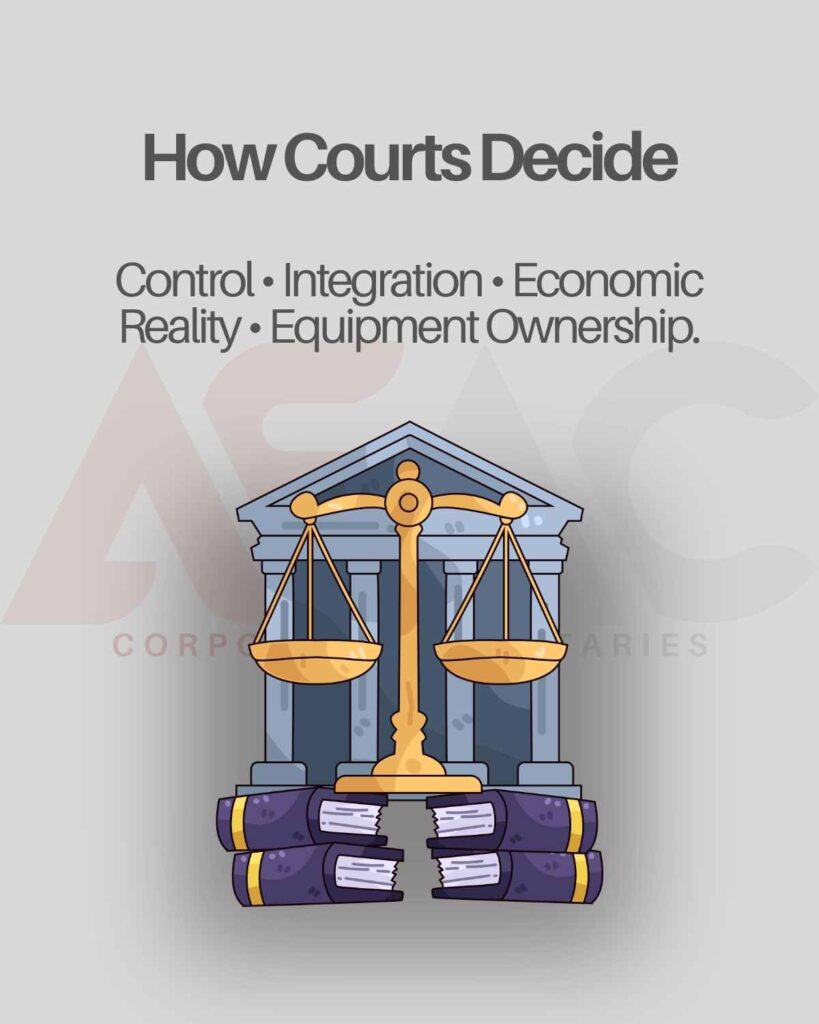
How Courts Decide: The Real Tests
Sri Lankan tribunals apply practical tests, not labels:
- Control Test: Does the company dictate how, when, and where work is done?
- Integration Test: Is the person embedded in your operations (rosters, internal systems)?
- Economic Reality Test: Who bears business risk? Are they paid for outputs or time?
- Equipment/Ownership: Whose tools and premises are used?
If these point to employment, statutory protections apply—even if your agreement says “independent contractor.”
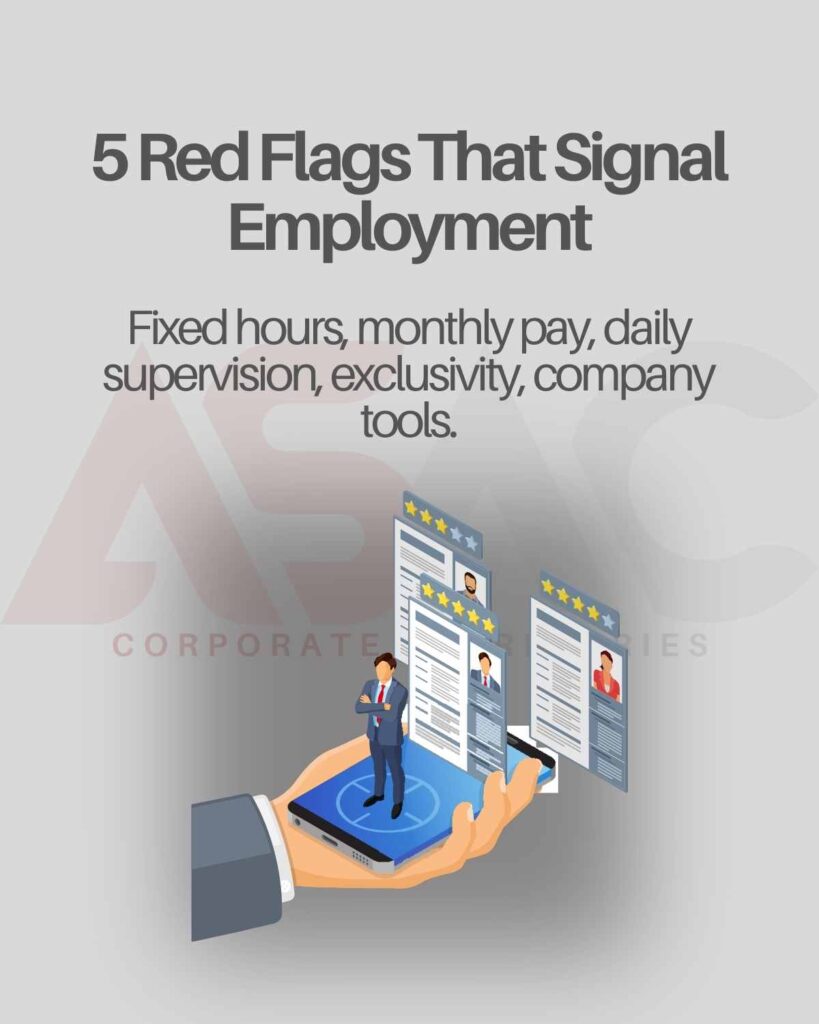
Common Pitfalls That Trigger Employment Status
Use of company equipment, uniforms, and official titles.
- Fixed hours at company premises (e.g., “45 hours onsite per week”).
- Monthly payments tied to time, not deliverables.
- Daily supervision and inclusion in internal HR processes.
- Exclusivity and broad non-compete clauses.
The Legal Landscape
- Shop & Office Employees Act: Governs hours, leave, overtime, and termination for employees.
- TEWA (Termination of Employment of Workmen Act): Requires consent or Commissioner approval for termination.
- Industrial Disputes Act: Labour Tribunals can grant “just and equitable” relief based on facts, not labels.
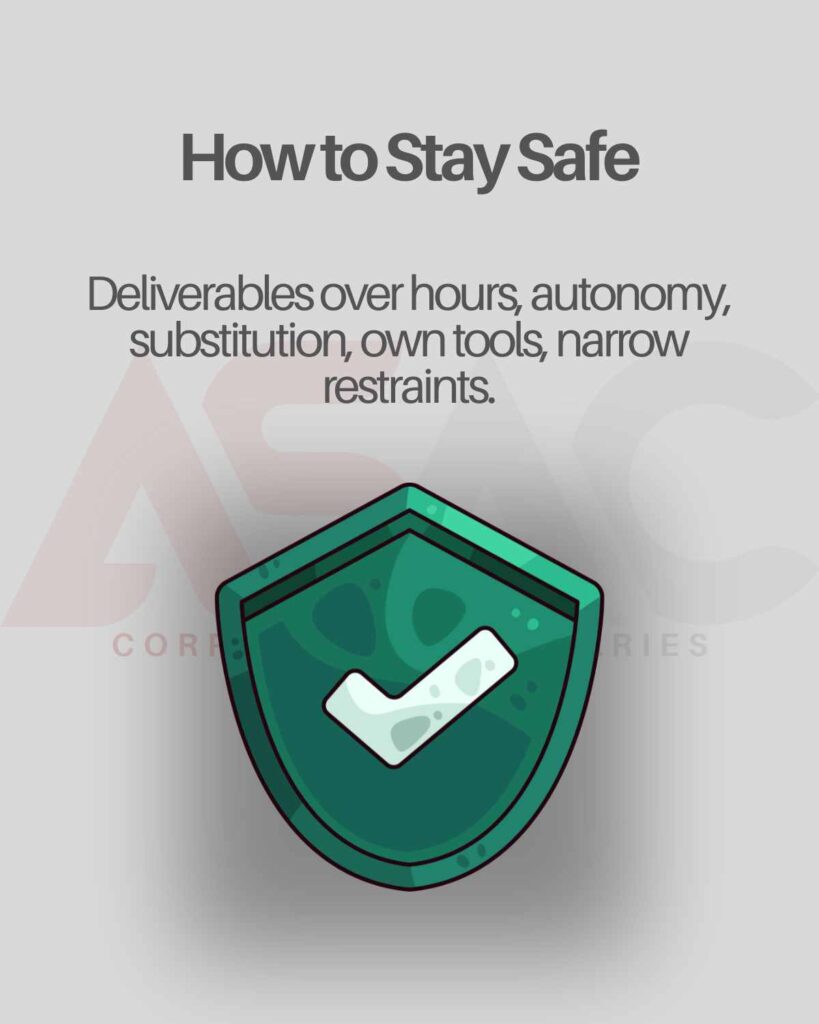
How to Reduce Risk
- Structure agreements around deliverables, not hours.
- Give consultants autonomy over method and schedule.
- Allow substitution and require own tools and insurance.
- Avoid exclusivity; permit multiple clients.
- Keep non-compete clauses narrow and reasonable.
- Align operations: invoices instead of payslips, no attendance registers, no leave tracking.
When Employment Is the Safer Route
If you need someone on-site at fixed hours (e.g., a pharmacist of record) and will supervise daily tasks, a compliant employment contract is safer. Use consultancy only for advisory work with genuine autonomy.
Final Word
A well-drafted consultancy agreement helps, but your operational reality matters most. If the facts show control and integration, a tribunal can override your contract. Misclassification can cost you heavily in back-payments and penalties.
Need Help Drafting?



 Company Registration
 Tax Registration
 Labour Registration
 Imports and Export Registration
 Trade Marks
 Company Secretary
 Meetings
 Audit & Assurance
 Tax Compliance
 Payroll Processing
 File Search