

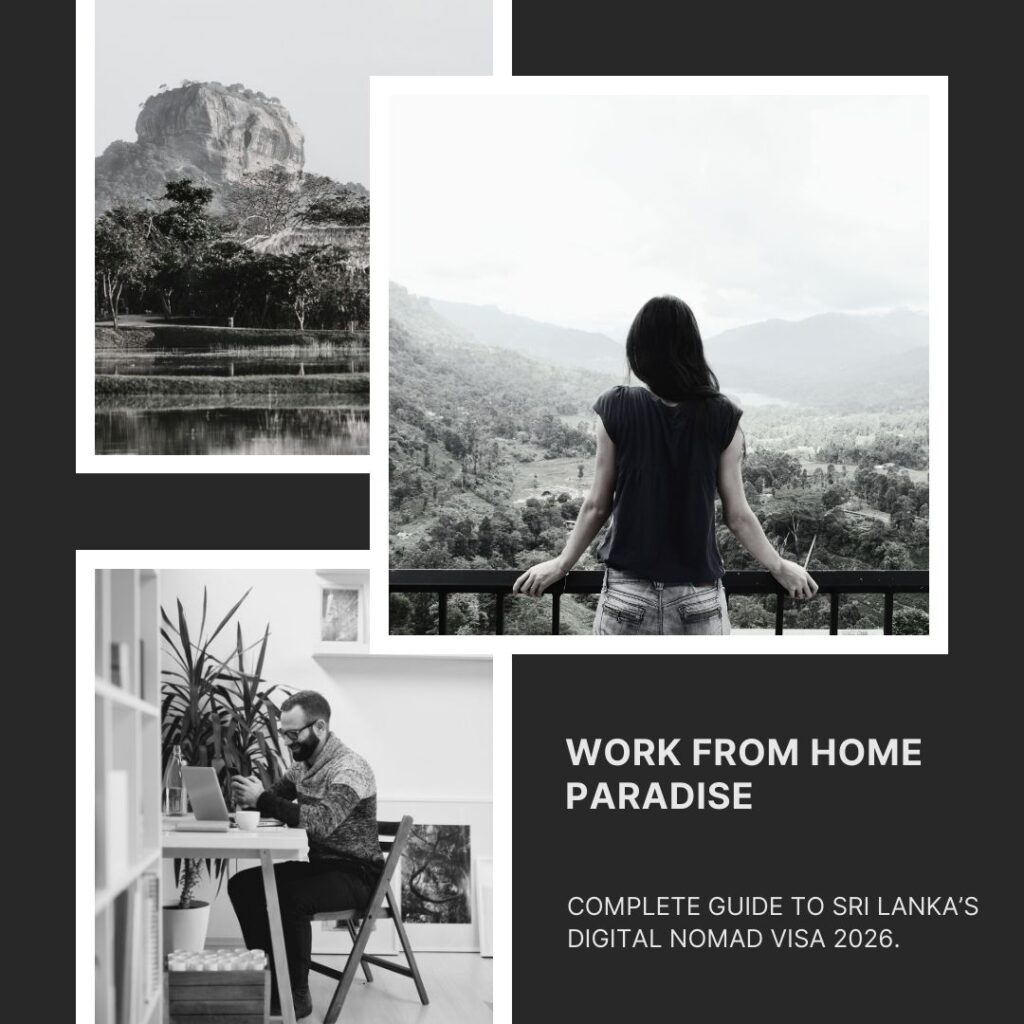
Sri Lanka has officially entered the global digital nomad landscape with the introduction of the Digital Nomad Visa (DNV)—a long‑stay residence visa designed for foreign professionals who work remotely for overseas employers or clients. While the idea is attractive, the details matter, especially around eligibility, income thresholds, renewal conditions, tax registration, and ongoing compliance.
This guide explains Sri Lanka’s Digital Nomad Visa step by step, highlights common mistakes applicants make, and outlines what remote professionals should consider before relocating.
What Is the Sri Lanka Digital Nomad Visa?
Sri Lanka’s Digital Nomad Visa allows foreign nationals to live in Sri Lanka for up to one year while working remotely for employers or businesses outside Sri Lanka. The visa is renewable annually and is intended to attract foreign income, long‑stay tourism, and global expertise into the country.
This is a residence visa, not a work visa, and that distinction is critical for compliance.
Sri Lanka Digital Nomad Visa Eligibility Criteria
The following categories are eligible:
- Foreign nationals aged 18 years or older
- Individuals engaged in remote employment, freelancing, or operating a foreign business
- Spouses and dependants of the main applicant
Key eligibility restriction
Your employer or business must not be registered in Sri Lanka, and all income must be derived from foreign sources only. Engaging in local employment or consulting is strictly prohibited.
Digital Nomad Visa Income Requirements in Sri Lanka
Applicants must demonstrate a minimum monthly foreign income remittance as follows:
- USD 2,000 per month – Main applicant
- Additional USD 500 per month – For each dependant beyond two dependants
This income must be evidenced through documentation and remains a continuing requirement, not a one‑time test at application stage.
Documents Required for the Sri Lanka Digital Nomad Visa
Applicants must submit a comprehensive set of documents, including:
- Completed visa application form
- Request letter from the applicant
- Passport (valid for at least 6 months)
- Passport‑size photographs
- Marriage and birth certificates (where applicable)
- Security clearance and medical clearance reports
- Police clearance certificate (issued within the last 3 months)
- International health insurance covering Sri Lanka
- Recommendation from the Ministry of Digital Economy
- Proof of minimum monthly income remittance
Incomplete, inconsistent, or outdated documentation is one of the most common causes of application delays.
Digital Nomad Visa Duration, Renewal & Tax Registration in Sri Lanka
- The Digital Nomad Visa is issued for one year
- It is renewable annually, subject to compliance
Critical compliance requirement
For visa extensions, applicants must submit proof of tax registration with the Inland Revenue Department of Sri Lanka. This requirement is frequently overlooked but is mandatory for renewal.
Tax registration does not automatically mean local income tax is payable, but registration, filings, and compliance obligations must be handled correctly.
Sri Lanka Digital Nomad Visa Fees (2026)
The current annual visa fees are:
- USD 500 – Main applicant
- USD 500 – Spouse
- USD 500 – Each dependant
These fees are exclusive of medicals, insurance, documentation, and professional advisory costs.
Benefits of Holding a Sri Lanka Digital Nomad Visa
Visa holders are entitled to:
- Legal residence in Sri Lanka for up to 12 months (renewable)
- Open and maintain local bank accounts
- Enter into property rental or lease agreements
- Enrol children in private or international schools
- Access local telecommunications and utility services
- Participate in co‑working spaces and ICT initiatives
What Digital Nomad Visa Holders Are NOT Allowed to Do
Digital Nomad Visa holders must not:
- Engage in employment with Sri Lankan entities
- Earn Sri Lanka‑source income
- Participate in political or disruptive activities
- Fail to notify authorities of changes in employment, income, or dependants within 30 days
Breaches may result in immediate visa cancellation.
Common Digital Nomad Visa Mistakes to Avoid
From experience, the most frequent issues include:
- Assuming the visa allows local consulting or short‑term project work
- Ignoring tax registration requirements during renewal
- Underestimating documentation and approval timelines
- Treating immigration and tax compliance as a one‑off exercise
The Digital Nomad Visa is straightforward—but only if managed correctly.
Frequently Asked Questions (FAQ)
Can I work for Sri Lankan clients on a Digital Nomad Visa?
No. All income must be derived from foreign sources only. Local employment, consulting, or contracting is not permitted.
Is tax payable in Sri Lanka on Digital Nomad Visa income?
Tax registration is required for visa renewal, but tax liability depends on individual circumstances, income sourcing, and residency status. Professional advice is recommended.
Can I open a bank account in Sri Lanka on a Digital Nomad Visa?
Yes. Digital Nomad Visa holders are permitted to open and maintain personal bank accounts in Sri Lanka.
Can my spouse and children apply with me?
Yes. Spouses and dependants may apply, subject to additional income requirements and visa fees.
How long does the Digital Nomad Visa process take?
Processing times vary depending on documentation completeness, clearances, and approvals from relevant authorities.
Final Thoughts
Sri Lanka’s Digital Nomad Visa offers a genuine opportunity for remote professionals seeking a strategic base in South Asia. However, immigration, tax, and compliance obligations are tightly connected.
Professional guidance can help applicants avoid costly mistakes, ensure renewals are smooth, and maintain long‑term legal compliance while enjoying the benefits of living and working remotely from Sri Lanka.


 Company Registration
 Tax Registration
 Labour Registration
 Imports and Export Registration
 Trade Marks
 Company Secretary
 Meetings
 Audit & Assurance
 Tax Compliance
 Payroll Processing
 File Search